
Digital Time Tracking Mandatory in 2026: What Changes and How to Prepare
Digital Time Tracking Mandatory in 2026: What Changes and How to Prepare
The Shift to Digital Time Tracking Is ComingSpain is moving toward a new era in labour management. The traditional paper-based or spreadsheet timekeep...
The Shift to Digital Time Tracking Is Coming
Spain is moving toward a new era in labour management. The traditional paper-based or spreadsheet timekeeping methods are being replaced by digital systems that are traceable, objective, and secure. This change is not just a recommendation; it is becoming a legal requirement that will affect almost every employer in the country. Whether you run a small business in Lleida or a larger operation in Barcelona, understanding these upcoming obligations is crucial to avoid penalties and ensure smooth operations.
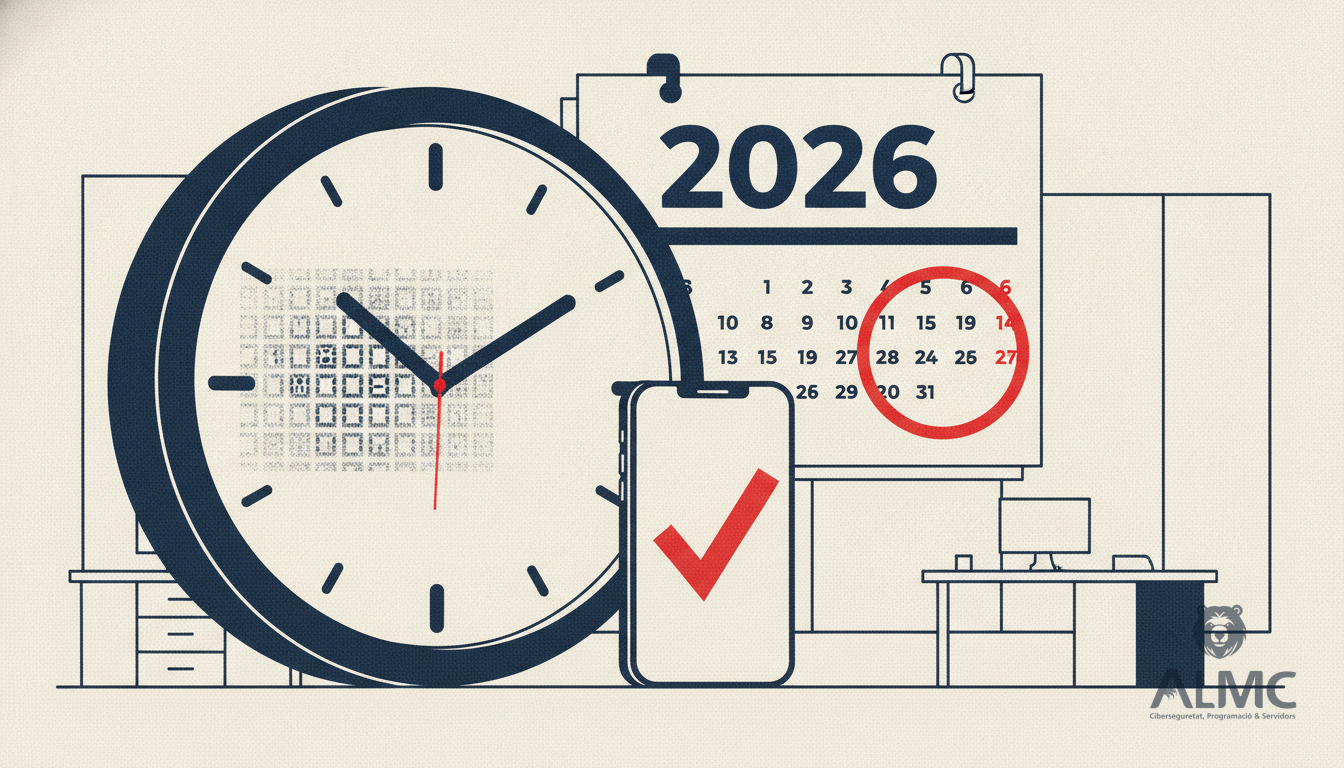
The evolution of the legal framework began with the Royal Decree-Law 8/2019, which amended the Workers' Statute to require daily time records. However, the new regulations go much further, mandating that time tracking be conducted through digital means that guarantee data integrity and accessibility. This means that manual entries or approximate calculations will no longer be acceptable.
Key Deadlines and the New Royal Decree
The Spanish government is expected to approve a new Royal Decree during 2025, with the digital time tracking obligation entering into force in early 2026. Notably, the current draft does not include the six-month adaptation period that was present in a previous bill, so businesses will have limited time to adjust. This makes early preparation essential.
The new decree will apply to all companies, regardless of size or sector. Even self-employed individuals who employ staff will be subject to these rules. Importantly, the scope now extends to groups that were previously exempt, such as domestic workers and remote employees. For domestic workers, the regulation stipulates that the method must be proportionate to the employer's resources, but it must still ensure compliance.
What Changes with the Digital System
The core difference between the current system and the new digital one lies in verifiability and accessibility. Traditional methods, such as Excel sheets or signed paper forms, are prone to manipulation and errors. In contrast, digital systems must ensure that each employee records their own start and end times immediately, with no possibility of external alteration. This eliminates the grey areas that existed before.
Another significant change is the requirement for systems to differentiate between on-site and remote work automatically. This is particularly relevant for companies that have adopted hybrid or fully remote models. The system must also store records securely for four years, making them available for inspection by labour authorities or workers' representatives upon request.
Special Work Relationships and Exceptions
The new rules will apply to most special work relationships, including those in hospitality, commerce, security, agriculture, transport, and maritime work. However, the decree will respect specific regulations that already exist for these sectors. Senior management staff are not explicitly exempted, which has created some uncertainty. The intention seems to be to apply the digital record to all employees, but further clarification is expected. In the meantime, it is wise to assume that even high-level executives will need to clock in.
Preparing Your Business for Compliance
Given the short timeline, it is essential to start evaluating your current time tracking processes now. The first step is to identify a reliable digital solution that meets the legal requirements. Look for a system that offers easy mobile or web-based check-in, automatic differentiation between work locations, and secure data storage. It should also provide clear reports that can be presented to inspectors without hassle.
At ALMC.es, we understand the challenges that these changes bring. Our time tracking solution is designed to be frictionless for both employers and employees. It allows your team to clock in from anywhere, while you get real-time visibility into working hours. The system generates comprehensive reports that are ready for inspection, ensuring that you remain compliant with Spanish labour law. With our help, you can navigate this transition with confidence and focus on what matters most—running your business.
The move to digital time tracking is a positive step towards greater transparency and fairness in the workplace. By adopting a robust system now, you not only avoid legal risks but also improve your operational efficiency. Don't wait until the last minute; act today to secure a smooth transition for your company.
Related
Put these ideas into practice
Talk to ALMC about a solution for your business. Explore your options or contact our team.