
ChatGPT Ads: a new channel for your online shop in Spain
ChatGPT Ads: a new channel for your online shop in Spain
Conversational advertising arrives at the checkoutFor years, online shops in Lleida, Barcelona and across Catalonia have fought for attention in the s...
Conversational advertising arrives at the checkout
For years, online shops in Lleida, Barcelona and across Catalonia have fought for attention in the same crowded places: search results, social feeds and marketplaces. A new channel is now taking shape, and it sits closer to the moment of decision than most of them. OpenAI has been rolling out ChatGPT Ads across a growing list of markets, and Spain has been part of that rollout since late summer. The platform now reaches dozens of countries and has passed the hundred-thousand-advertiser mark, which tells you this is no longer an experiment confined to a handful of global brands.
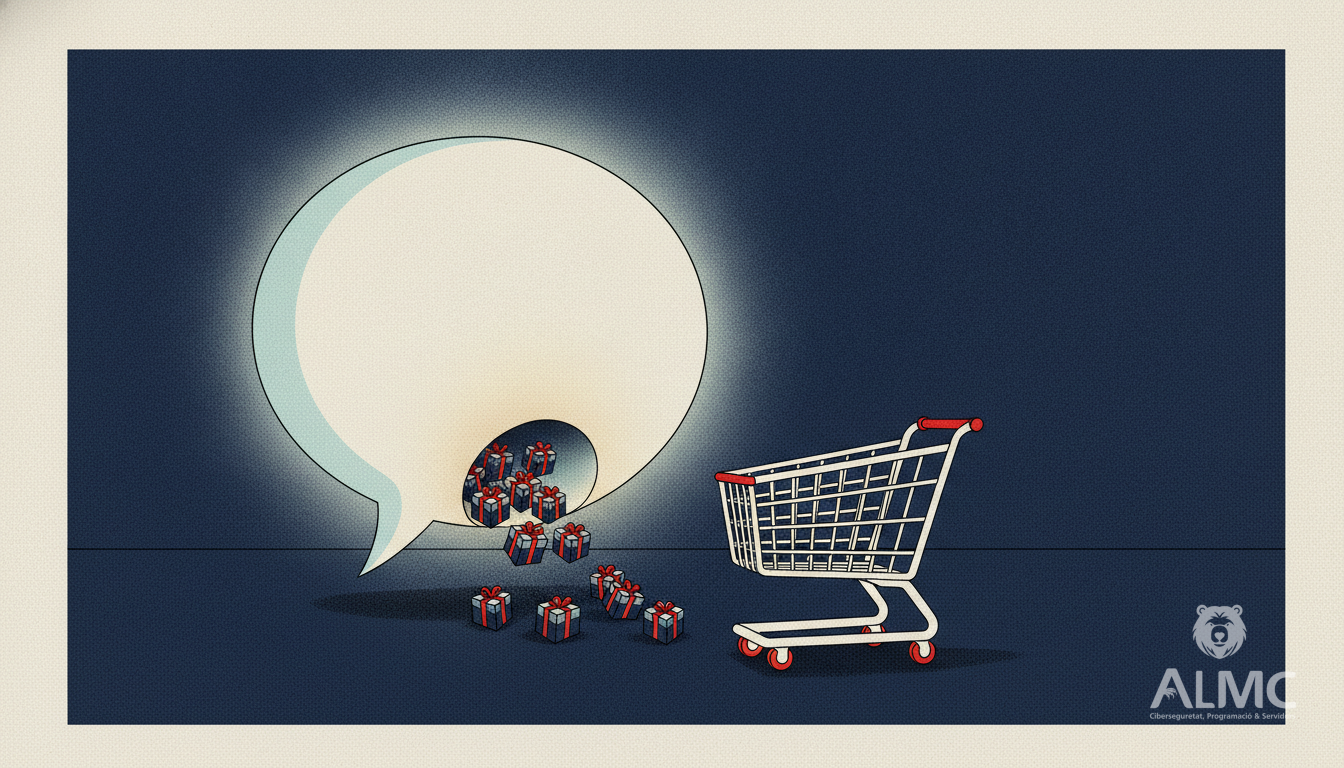
The important detail for a shop owner is not the headline number. It is where the ads appear: inside conversations where someone is already comparing options, asking for recommendations or weighing up a purchase. That is a very different context from a banner interrupting an article. It is closer to a shop assistant being asked a question, and that changes what a good ecommerce presence looks like.
Why this matters for Spanish ecommerce
Spanish consumers have adopted AI assistants quickly, and product research is one of the most common uses. A shopper in Girona may ask for a comparison of two coffee machines, a parent in Tarragona may look for a durable school backpack, and a small business in Lleida may want advice on invoicing software. In each case, the assistant answers with a mix of general knowledge and, increasingly, sponsored placements.
Advertising on the platform is currently limited to the free and low-cost tiers, while paid subscriptions stay ad-free. Conversations remain private from advertisers, ads are labelled and kept separate from the answers, and the company states that campaigns do not influence what the assistant says. For a brand, that means the creative and the landing experience have to do the persuading, not the placement alone.
- Discovery shifts. Some product searches that used to start on a search engine now start in a chat window.
- Intent is explicit. Users describe needs in full sentences, which rewards shops with clear, well-structured product information.
- Trust is fragile. A sponsored answer that leads to a slow or confusing shop burns goodwill fast.
The part nobody advertises: your shop has to keep up
Here is where many campaigns quietly fail. Traffic arrives from a new source, and the online shop behind it was built years ago, with a slow product page, a checkout that asks for an account too early and stock data that is out of sync. The ad did its job; the store did not.
This is the work we focus on at ALMC.es. An online shop that genuinely sells is not just a catalogue with a payment button. It is a PrestaShop or WooCommerce build tailored to how the business actually operates, with conversion optimisation treated as an ongoing discipline rather than a one-off redesign. That means fast pages, clean product feeds, sensible shipping and return information, and a checkout that respects the buyer's time. It also means the full stack behind the store, from hosting and backups to analytics, is solid enough to absorb sudden spikes in traffic without falling over.
Preparing your store for conversational traffic
You do not need to rebuild everything to benefit from this shift. A few practical steps make a real difference:
- Write product pages for questions, not keywords. Answer the doubts a shopper would voice aloud: dimensions, compatibility, delivery times, warranty conditions.
- Keep structured data accurate. Prices, availability and variants should be consistent everywhere, because assistants and feeds rely on them.
- Measure beyond the last click. Set up proper tracking so you can tell whether conversational campaigns bring buyers or just browsers.
- Respect GDPR from the start. Consent banners, data retention and cookie handling must be correct before you scale any new channel.
- Test the mobile checkout. Most of this traffic will be on a phone, often mid-conversation.
A channel to test, not a strategy to bet everything on
Conversational ads are still maturing. Formats, buying options and measurement tools are being expanded, and the rules will keep shifting. The sensible approach for a shop in Catalonia is to treat it as one more channel to test with a controlled budget in euros, measure honestly and compare against the channels you already trust. What should not wait is the foundation underneath: a well-built, fast and measurable ecommerce platform. Whatever the next advertising format turns out to be, a shop that converts is the asset that makes every channel worth trying.
Related
- WooCommerce vs PrestaShop: Which Ecommerce Platform Wins in 2025?
- CRO for Ecommerce: Turning WooCommerce and PrestaShop Templates into Sales Engines
- Agentic Commerce: How AI Agents Are Rewriting the Rules of Online Shopping
- Desarrollo web
Put these ideas into practice
Talk to ALMC about a solution for your business. Explore your options or contact our team.