
The Hidden Economy of Stolen Data: What Your Identity Is Worth
The Hidden Economy of Stolen Data: What Your Identity Is Worth
The Hidden Economy of Stolen DataWhen we enter our details on a website, upload a copy of our ID or pay with a card, we rarely stop to consider what t...
The Hidden Economy of Stolen Data
When we enter our details on a website, upload a copy of our ID or pay with a card, we rarely stop to consider what those data points are worth once they leave our hands. The answer is often far less spectacular than we imagine, yet far more consequential than we would like. A card number may change hands for a few euros. An email address may be worth cents. A complete identity package can be found for tens of euros, while certain verified accounts or financial accesses can reach hundreds or even thousands. The paradox is that our data has no fixed price. Its value depends on what it allows someone to do with it.
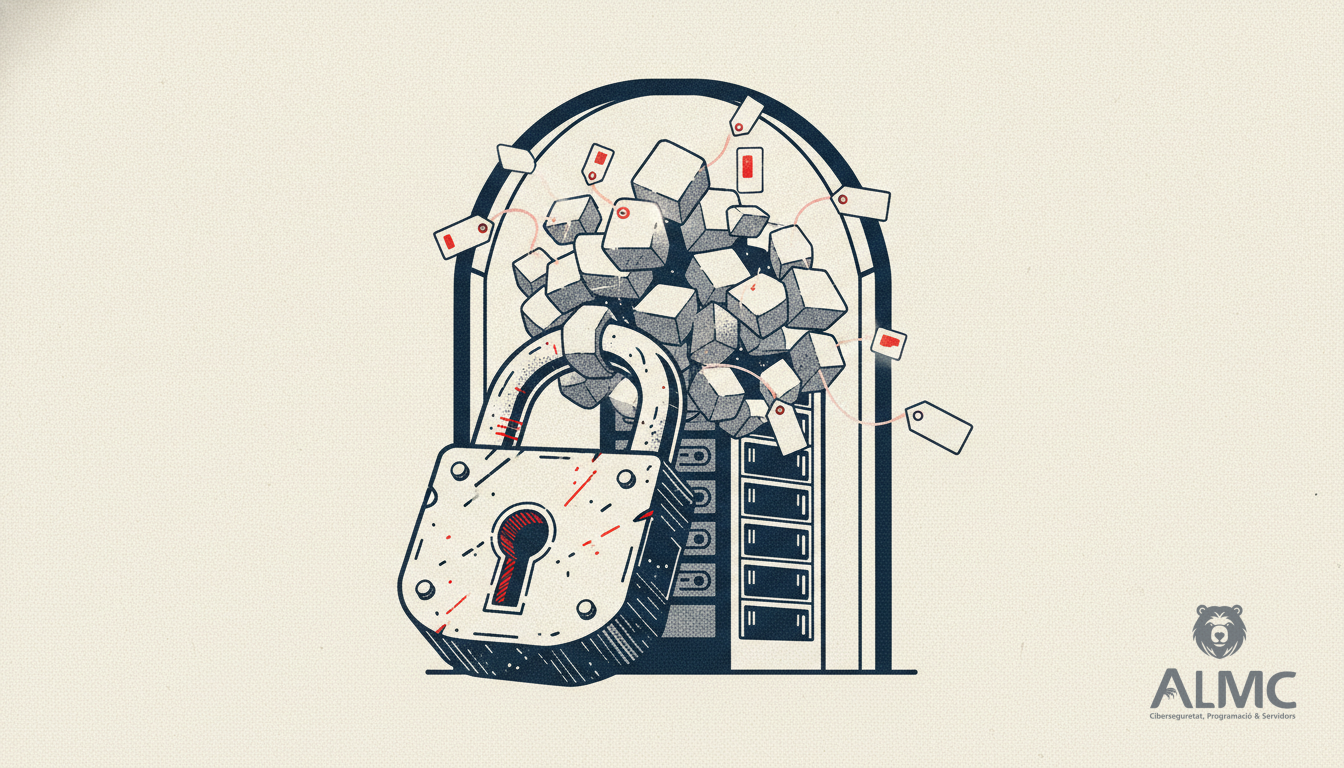
From Dark Web Bazaar to Industrial Data Economy
For years, we spoke of the dark web as a clandestine bazaar where a criminal walks in, finds a stolen card and pays for it. The reality is far more industrial. Europol's IOCTA 2025 describes an economy where data has become a commodity: it is stolen, classified, enriched, sold, resold and finally used as raw material for other crimes. The stolen data point is only the first link in the chain.
The Price of a Person
Imagine someone obtains a database with information about us. The first level might be as simple as name, surname, date of birth, address, phone and email. It does not seem like much, and economically, it is not. Abundance has turned certain personal data into a commodity. An email or phone number appears so often in leaks, commercial databases and compilations that its individual price can fall practically to zero. But then someone adds a piece: an ID number. Then another: a selfie. Then another: a bank account. What was initially a set of scattered data begins to resemble a complete digital person.
In underground circles, the concept of fullz has existed for years: sets of information complete enough to represent an identity and enable different types of fraud. Here one of the first rules of this market appears: the more systems an identity can cross, the more it is worth. An email allows little; an email with a password allows more; an identity document allows more; a document accompanied by a photo of the holder allows even more; and an identity that can also pass KYC verification processes can become much more valuable. The price is not in the data. It is in the possibility of exploiting it.
How Much Does a Stolen Card Cost?
This difference explains why the figures we find when studying these markets can seem absurd. A recent study based on hundreds of price points from clandestine markets, academic research and security publications estimated very different values depending on the type of information. Health data appeared around $300, bank PINs around $196, bank account numbers around $69, driving licences around $68, passport numbers around $33 and card numbers around $18. The credit card, that element we normally imagine as the great treasure of a leak, actually occupies a much more modest position. Why? Because a card has a characteristic that drastically reduces its useful life: it can be cancelled. Once the bank detects fraud and blocks the card, the number becomes practically worthless.
An identity document is different. An identity can be used to request services, open accounts, pass identification processes or be combined with other pieces of information. Therefore, the market is not simply valuing "data"; it is valuing persistence, utility and monetisation capacity. A credit card can cost less than a cinema ticket. Studies on card markets show precisely that contradiction. Research has found average values of around $17 for basic card data — number, CVV, expiry, name and postcode — while cloned physical cards could reach much higher values. More recently, an analysis of tens of thousands of records published during 2025 placed the average global price of a stolen card around €7, although with enormous geographical differences. In that study, Spanish cards reached approximately €10 on average, while Japanese cards were around €20.
What This Means for Your Business
For system administrators, hosting companies and SMEs with their own servers, this underground economy is not an abstract threat. The data your servers hold — customer records, payment details, internal communications — is exactly the kind of raw material that feeds this market. A single compromised server can become a distribution point for thousands of identities, and the reputational and legal consequences under GDPR can be severe. In Spain, the AEPD can impose fines of up to €20 million or 4% of annual global turnover, whichever is higher, for serious infringements.
Moreover, the industrialisation of data theft means that attacks are increasingly automated. Bots scan IP ranges for vulnerable services, attempt credential stuffing and exploit known flaws. If your infrastructure is not actively defended, it is only a matter of time before it appears on someone's list.
Protecting Your Servers: A Centralised Approach
Traditional server security often relies on isolated measures: a firewall here, a manual IP block there, perhaps fail2ban configured on a single machine. But in multi-server environments, this approach leaves gaps. An attacker blocked on one server can simply try another. That is why ALMC has developed Abuse Shield, a service that centralises protection across all your servers. It automatically blocks malicious IPs, manages fail2ban across multiple machines and shares an IP reputation feed between all your servers. When one server detects an attack, all the others learn from it instantly.
This shared intelligence is crucial because it turns your infrastructure into a coordinated defence system. Instead of each server fighting alone, they act as a single organism. The result is fewer successful intrusions, less downtime and a significantly reduced risk of your data ending up on the underground market. For businesses in Barcelona, Lleida, Tarragona or Girona, where digital competitiveness depends on trust, this is not just a technical advantage — it is a business imperative.
Conclusion
The value of your data is not measured in euros on a dark web listing. It is measured in the trust your customers place in you, the continuity of your operations and the legal compliance you maintain. Understanding the economics of stolen data is the first step. The second is ensuring your servers are not an easy source. With centralised protection like Abuse Shield, you can focus on your business while your infrastructure defends itself.
Related
- How to Harden Your Servers with Fail2ban and IP Reputation Feeds
- Fail2ban: Your First Line of Defense Against Unauthorized Server Access
- Critical libssh2 flaw: urgent patch for SSH servers
- Desarrollo web
Put these ideas into practice
Talk to ALMC about a solution for your business. Explore your options or contact our team.