
Abuse Shield: Centralised Server Protection for Your Infrastructure
Abuse Shield: Centralised Server Protection for Your Infrastructure
The new threat landscape demands more than a good modelFor years, the debate around offensive AI focused on a simple question: which model knows more...
The new threat landscape demands more than a good model
For years, the debate around offensive AI focused on a simple question: which model knows more about hacking. That question is now obsolete. Recent campaigns against financial institutions in South Korea in late 2026 have shown that the real risk lies not in the model itself, but in the infrastructure that surrounds it. Attackers are no longer relying on a single clever prompt; they are building persistent, distributed operations that can run for days, survive reboots and coordinate multiple agents simultaneously.
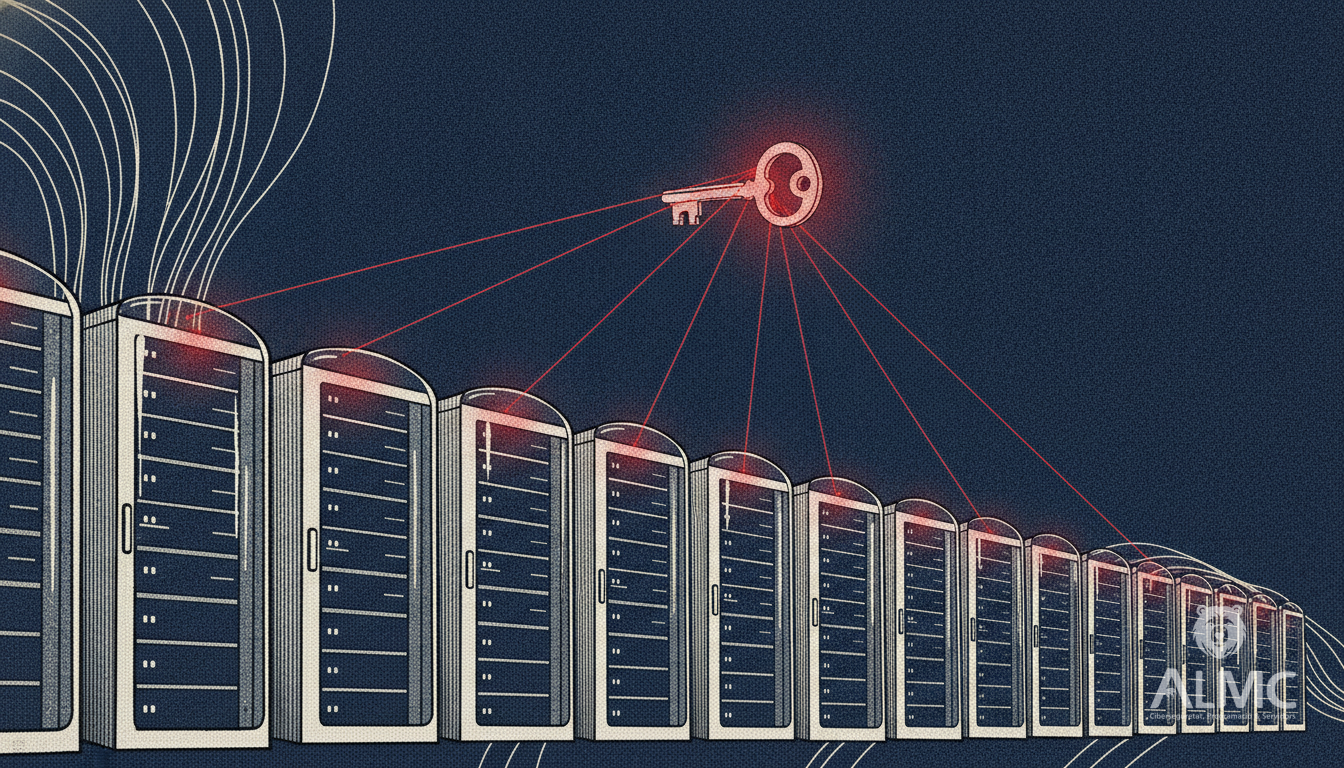
This shift has profound implications for system administrators, hosting companies and SMEs with their own servers in Spain and across Europe. If offensive tooling has evolved into a stateful, multi-agent execution platform, defensive strategies must evolve too. Reactive, machine-by-machine protection is no longer enough.
What is Abuse Shield?
Abuse Shield is ALMC's answer to this new reality. It is a centralised protection platform designed to shield your servers from malicious IPs, brute-force attacks and abusive traffic. Instead of configuring and monitoring fail2ban separately on each machine, Abuse Shield manages it across your entire fleet from a single point of control.
The core idea is simple but powerful: when one server detects an attack, every server in your infrastructure learns about it instantly. This shared reputation feed turns isolated machines into a coordinated defence network.
Key features that make a difference
- Automatic IP blocking: malicious IPs are blocked the moment they are detected, without waiting for manual intervention.
- Managed fail2ban across multiple machines: no more inconsistent jail configurations or forgotten servers. Abuse Shield applies and maintains your policies everywhere.
- Shared reputation feed: an IP that attacks one server is immediately flagged across all your infrastructure, multiplying your response speed.
- Centralised dashboard: see blocked IPs, attack patterns and server status from one place.
- GDPR-friendly logging: all data handling is designed to comply with European privacy regulations, including the retention and processing of IP addresses.
Why per-server protection falls short
Traditional fail2ban setups work well on a single machine, but they break down at scale. If you manage ten, fifty or a hundred servers, each one learns about attacks in isolation. An attacker can probe one server, get blocked, and then move to the next with a clean slate. Meanwhile, your team wastes hours replicating rules, checking logs and chasing alerts across different systems.
Abuse Shield eliminates that fragmentation. By centralising both the configuration and the intelligence, it reduces administrative overhead and closes the gaps that attackers exploit. For hosting providers in Barcelona, Lleida, Tarragona or Girona managing client infrastructure, this means stronger security with less effort.
Designed for real-world infrastructure
Abuse Shield is built for administrators who need results, not complexity. It integrates with your existing servers, whether they run on-premises or in the cloud, and supports the tools you already use. The managed fail2ban component means you do not have to rewrite your entire security stack; you simply centralise it.
For SMEs with their own servers, the benefit is immediate: enterprise-grade protection without hiring a dedicated security team. For hosting companies, it is a competitive advantage: offer your clients a demonstrably safer environment, backed by a shared reputation network that grows stronger with every server you add.
Staying ahead of automated threats
The campaigns observed in 2026 remind us that attackers are automating faster than many defenders. Multi-agent systems can explore, persist and adapt without human supervision. Defenders need automation too, but of the right kind: centralised, coordinated and always on.
Abuse Shield is not just another firewall rule. It is a shift in how you approach server security: from isolated defence to collective intelligence. In a landscape where offensive infrastructure is becoming persistent and distributed, your defence should be too.
If you manage servers in Spain or across Europe, it is time to ask whether your current setup would survive a coordinated, automated attack. With Abuse Shield, you can answer that question with confidence.
Related
- How to Harden Your Servers with Fail2ban and IP Reputation Feeds
- Fail2ban: Your First Line of Defense Against Unauthorized Server Access
- Critical libssh2 flaw: urgent patch for SSH servers
- Desarrollo web
Put these ideas into practice
Talk to ALMC about a solution for your business. Explore your options or contact our team.